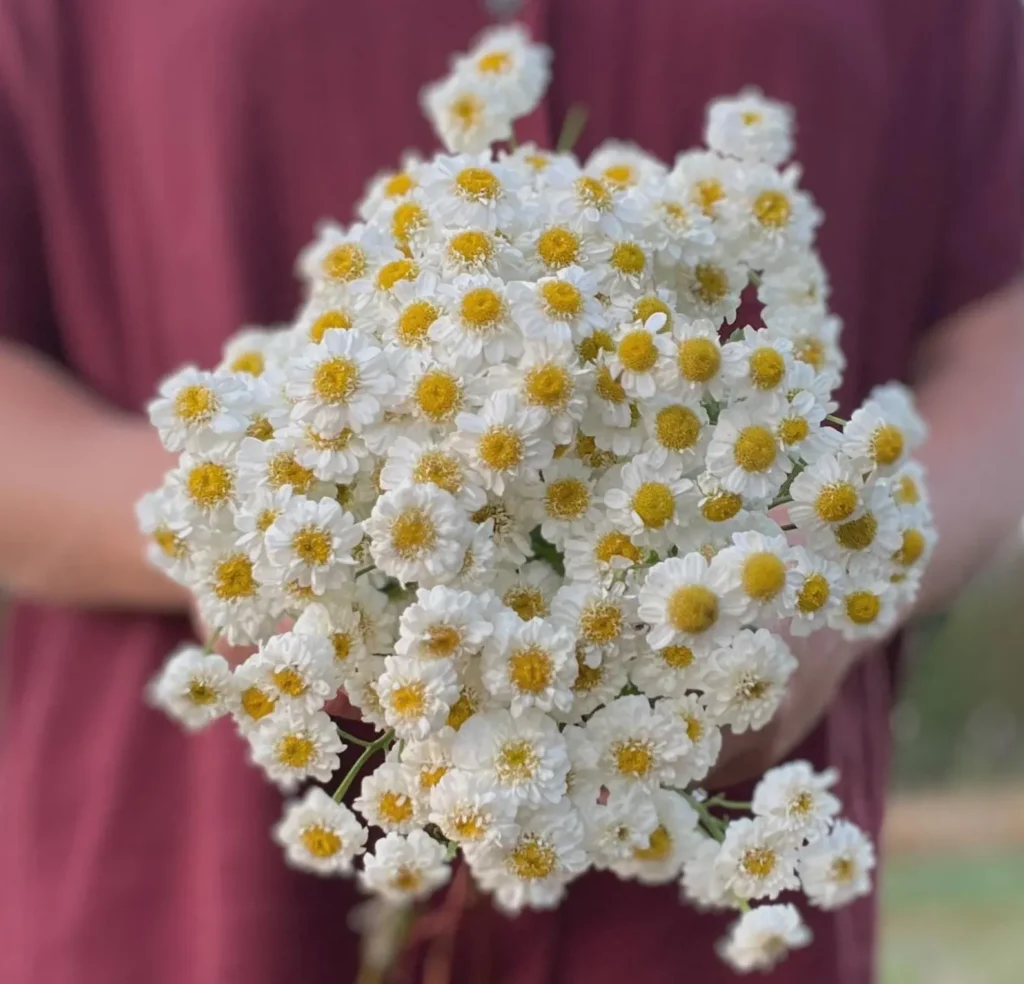
Double Feverfew Seeds: Cutflower, Pollinator Favorite

Double Feverfew

This is a first-year blooming perennial! Pollinators love it, and it is super drought-tolerant to boot! An easy-to-grow plant that produces loads of airy stems smothered in miniature snowball-like blooms. The fluffy white flowers have delicate golden centers, making wonderful accents in bouquets. A favorite old-fashioned variety that is so sweet and goes so well with pretty much everything. One of my new favorites for sure!

Plant type: hardy annual/tender perennial

Height: 24 to 36 in

Site: full sun

Days to maturity: 100 to 110 days

Plant spacing: 9 in

Pinch: not necessary

Seed Sowing & Growing Notes
Start seeds indoors in trays 8 to 10 weeks before the last frost; transplant out after all danger of frost has passed.

Harvesting/Vase Life
Harvest when one-quarter to one-half of the flowers on a spray are open. Feverfew is notorious for making its water dark and murky overnight, even with a floral preservative. To combat this, add a few drops of bleach to the water. Expect a vase life of 7 to 10 days.

Double Feverfew Seeds: Cutflower, Pollinator Favorite Read More »
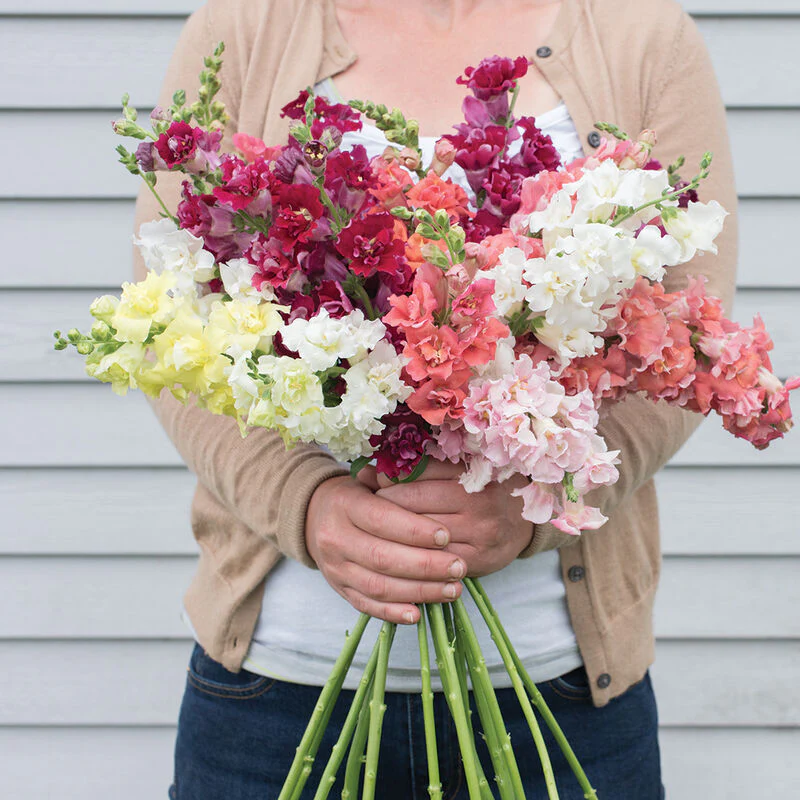
Madame Butterfly Snapdragon, Multi-Petal Azalea Style

Madame Butterfly Snapdragons.

These are unique azalea-type snapdragons with double-petaled blooms that are ruffled and full. With their whimsical, romantic, cottage-garden style, they will certainly put on a show in your garden and in your bouquets.

This Madame Butterfly Mix includes white, magenta, pink, yellow, rose, red, and bronze flowers that create a lush bouquet when cut. The 26-36” plants can be grown in a greenhouse or in the open field and garden.

Growing and Harvest Information Group 3-4 (blooms through the warmth of Summer)

Plant Type: Hardy Annual(can handle cool temps, and mild frost)

Height: 26-36″

Sun: Full Sun

Sow 8- 10 weeks indoors before the last frost. Sow on the surface of a sterilized seed starting mix. To avoid damping off (to which snapdragons are somewhat prone), increase ventilation, use a layer of vermiculite on top of the soil, and water only from below.

Transplant: Harden off and transplant once the soil can be worked in the spring, 2-4 weeks before your last frost date.

Days to Maturity: 100-120 days

Plant Spacing: 25-30cm (9-12″)

Pinch: Yes, when 4-6″ tall

Vase Life: 7-10 days, floral preservative is recommended

Potential Harvest Yield: 6-10 stems per plant

Harvest Tips: Harvest when the flowers are open, when ½ of the flowers are open.

Madame Butterfly Snapdragon, Multi-Petal Azalea Style Read More »

Warm Pastel Zinnia seeds

Warm Pastel Zinnias (elegans)

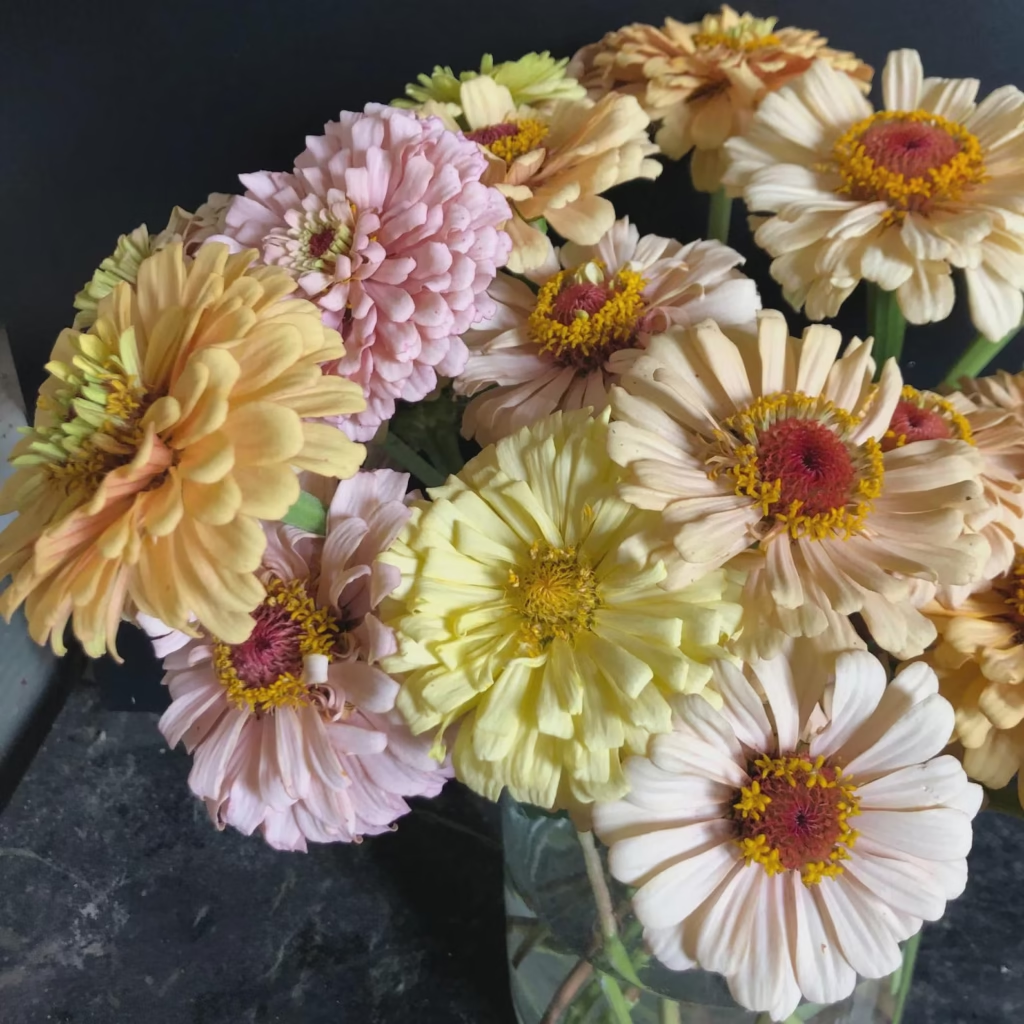
This is a beautiful mix of pastels, which are a little warmer than the Ballerina mix with more soft peachy, amber, and creamy yellows, as well as some blush tones. Mostly full and fluffy, these will be beautiful in bouquets as well as in the garden.

Zinnias are an amazing flower, so easy, yet so rewarding! Once started, they require little care, except watering a bit during really bad drought (dense planting and mulch go a long way to mitigate this). The only other thing you could do to help them thrive is to cut for bouquets on a regular basis, as these are true “cut and come again” plants.
Watching the flowers in my garden, the zinnias were always the most popular with butterflies and hummingbirds, and they performed well through the drought! I highly recommend for all gardens!

I am planning on trying my hand at creating some new colours from this one, so check back next year for some surprises😊

Plant Type: Annual
Height: 120cm (48″)
Sun: Full Sun
Sow: Indoors 4-6 weeks before the last frost, or direct seed into prepared beds after the last frost.
Transplant: Harden off and transplant after the last frost
Days to Maturity: 75-90 days
Plant Spacing: 25-30cm (9-12″)
Pinch: Yes
Vase Life: 6-8 days
Potential Harvest Yield: 10-15 stems per plant or more
Harvest Tips: Harvest when the stems pass the wiggle test, hold the stem about 8″ below the flower head and gently shake, if the neck is stiff, it is ready for harvest.

Warm Pastel Zinnia seeds Read More »

04945 04 ballerina zinnia

Pastel Shades Zinnia Elegans Seeds / Ballerina style/ Pastel bouquets

Zinnia elegans (Johnny’s Ballerinas)

Zinnias are an amazing flower, so easy, yet so rewarding! Once started, they require little care, except watering a bit during really bad drought (dense planting and mulch go a long way to mitigate this). The only other thing you could do to help them thrive is to cut for bouquets regularly, as these are true “cut and come again” plants.

Watching the flowers in my garden, the zinnias were always the most popular with the butterflies and hummingbirds, and they performed well through the drought!

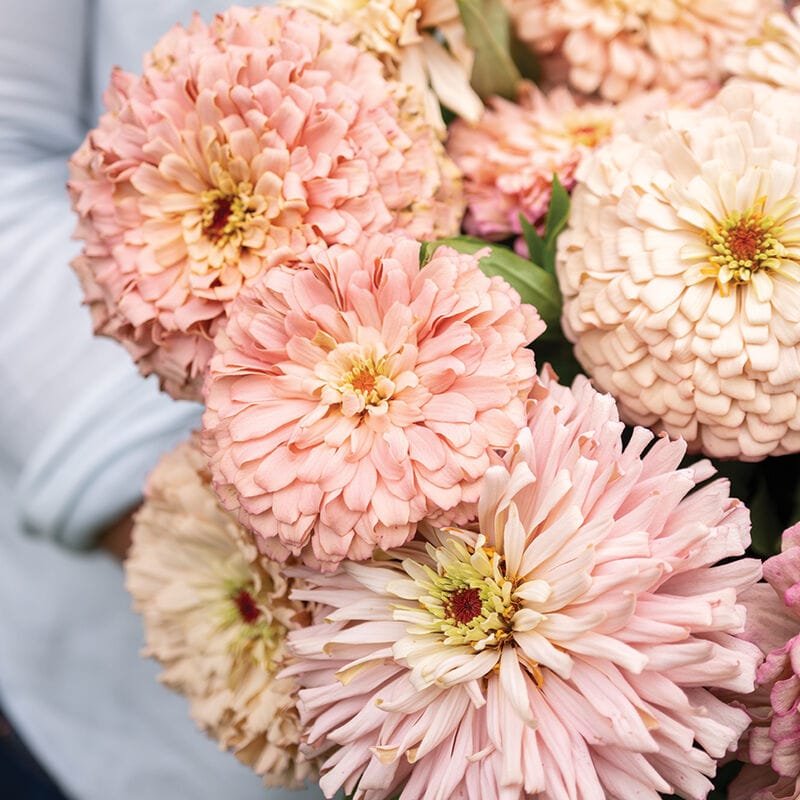
A lovely mix of pastel colours, this zinnia, bred by Johnny’s, grows 4–6″ flowers in a blend of soft pink and pale peaches, with a mix of both dahlia- and cactus-type blooms. Produces a high percentage of double blooms as well. May contain a few off-types of ivory, dark pink, or yellow, adding even more interest in the mix.

I am planning on trying my hand at creating some new colours from this one, so check back next year for some surprises 😊

Plant Type: Annual

Height: 120cm (48″)

Sun: Full Sun

Sow: Indoors 4-6 weeks before the last frost, or direct seed into prepared beds after the last frost.

Transplant: Harden off and transplant after the last frost

Days to Maturity: 75-90 days

Plant Spacing: 25-30cm (9-12″)

Pinch: Yes

Vase Life: 6-8 days

Potential Harvest Yield: 10-15 stems per plant or more

Pastel Shades Zinnia Elegans Seeds / Ballerina style/ Pastel bouquets Read More »

dahlia1

Dahlia Seeds Mixed colours and sizes

Mixed Dahlia seeds, unique mixed colours, sizes

15 SEEDS

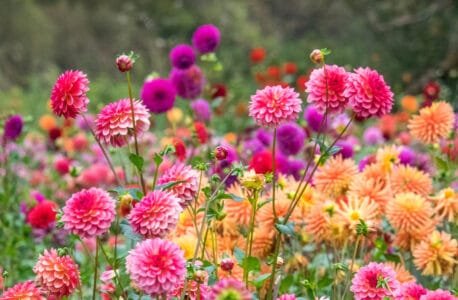
This is a mixture of all different open-pollinated dahlias from my garden this year, so each should be an interesting and unique surprise. This is a combination of fluffy multi-petalled and single-petalled open-faced varieties in varied pretty colours of yellows, pinks, peach, reds, and whites. Makes for some lovely bouquets.

Each seed will end up as a bunch of dahlia tubers you can dig up, store, and replant year after year.

Seeds from dahlias are always a combination of both the parents genes, just like us, so you never really know what you’re going to get. This is also the way new varieties are discovered. When you divide tubers or get cuttings, those are clones of the mother plant, and this is how famous varieties are reproduced.

Starting Seeds:
Seeds should be started at least 6 to 8 weeks before you want to plant them out. Dahlia seeds germinate sporadically, so be patient—they will come up, but it can take up to two weeks. Direct-seeding into the garden isn’t recommended.

While dahlia seeds benefit from additional warmth to help them germinate, they prefer slightly cooler temperatures than other summer bloomers, so a regular home temperature is fine.

Dahlias do best in rich, heavily amended soil. Prepare planting beds with a generous dose of compost or manure, and mulch to help hold moisture if the area is dry.

Although they can handle the heat of summer, it’s recommended to provide some afternoon shade in extremely hot climates.

Space plants 12 in (30 cm) apart and water deeply twice a week. (Dahlia seedlings can be grown much closer together, with as little as 4 in [10 cm] between plants. This method will produce a jungle of towering stems and is how most professional breeders increase the number of seedlings they can grow in a season.)

Plants inevitably grow tall and heavy and may require sturdy staking, which should be placed before they grow too large and topple over from the weight of their showy blossoms.

If you’re growing dahlias in garden beds, you can pound individual stakes next to each seedling at planting time and tie them up as they grow.

Dahlia Seeds Mixed colours and sizes Read More »

01987 02 queenredlime

Queeny Red Lime Zinnias

Queeny Red Lime Zinnias

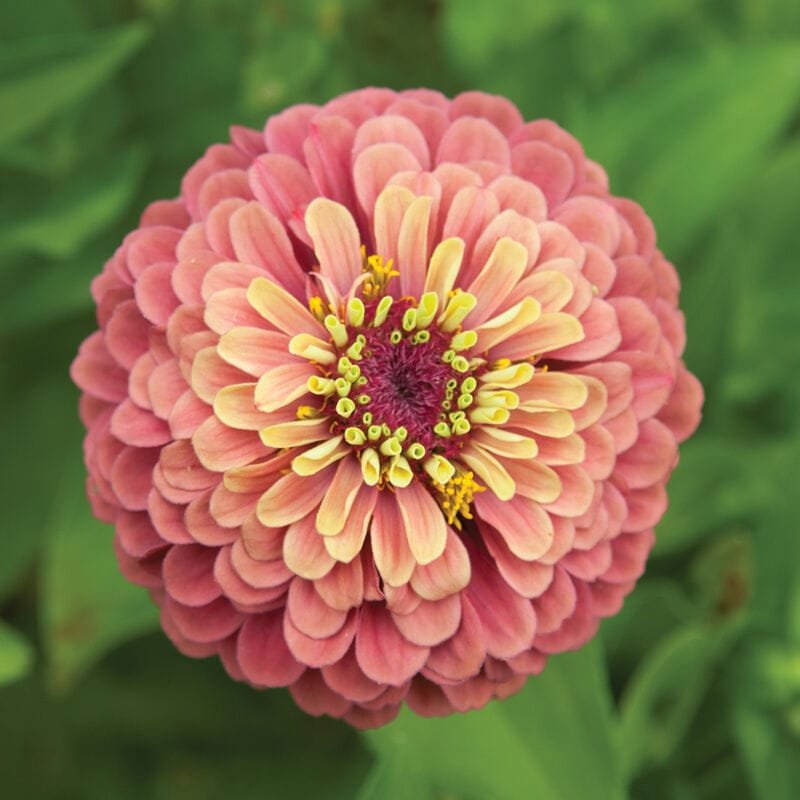
Zinnias are one of the easiest and most rewarding cut flowers to grow. They handle drought pretty well, and keep on blooming from Summer till frost. The Queeny series is a very special variety with its unique colouring of reddish pink outer, gradually shifting through pinks, peach, soft coral yellow, then the lime green around the deep pink center. They are so elegant and magical to behold

Mostly double and semi-double blooms with a small percentage of singles, yielding multiple cuts throughout the season. Because of their unique colours, they go very easily with almost any other flowers in any bouquet!

Plants are 75-100cm (30-40”) tall.

Timing
Direct sow after the last frost. Zinnias don’t transplant well, but can be started indoors, if necessary, in peat or coir pots, 6-8 weeks before planting out. Maintain a soil temperature of 21-26°C (70-80°F). Seeds should germinate in 5-24 days.

Starting
Just cover Zinnia seeds, and aim for a final spacing of 25-30cm (10-12″) between plants.

Growing
Pinching: To get a fuller plant and more blooms, pinch back to the 2nd set of true leaves once the plant has 4 or 5 true sets of leaves.

Depending on the variety, it takes about two months after sowing for the first flowers to appear. Take regular cuttings of Zinnia stems to enjoy indoors, starting mid-summer right into the fall. Cutting encourages the production of new flowers and seems to stimulate the plants for greater vigour. Watch for signs of powdery mildew on the leaves, usually in late summer. Try to avoid overhead watering to prevent mildew.

Queeny Red Lime Zinnias Read More »